TPU system architecture
Every Cloud TPU system is built up from one component: the TPU chip, a specialized processor designed from the ground up for the matrix math of machine learning. This page works from the inside out - what sits inside a single chip, then how chips scale into cubes, pods, and slices, how Multislice stretches a job across the data-center network, and how ICI resiliency keeps the interconnect reliable at scale.
What's inside a TPU chip?
Each TPU chip is engineered from a small set of specialized components that together accelerate ML workloads.
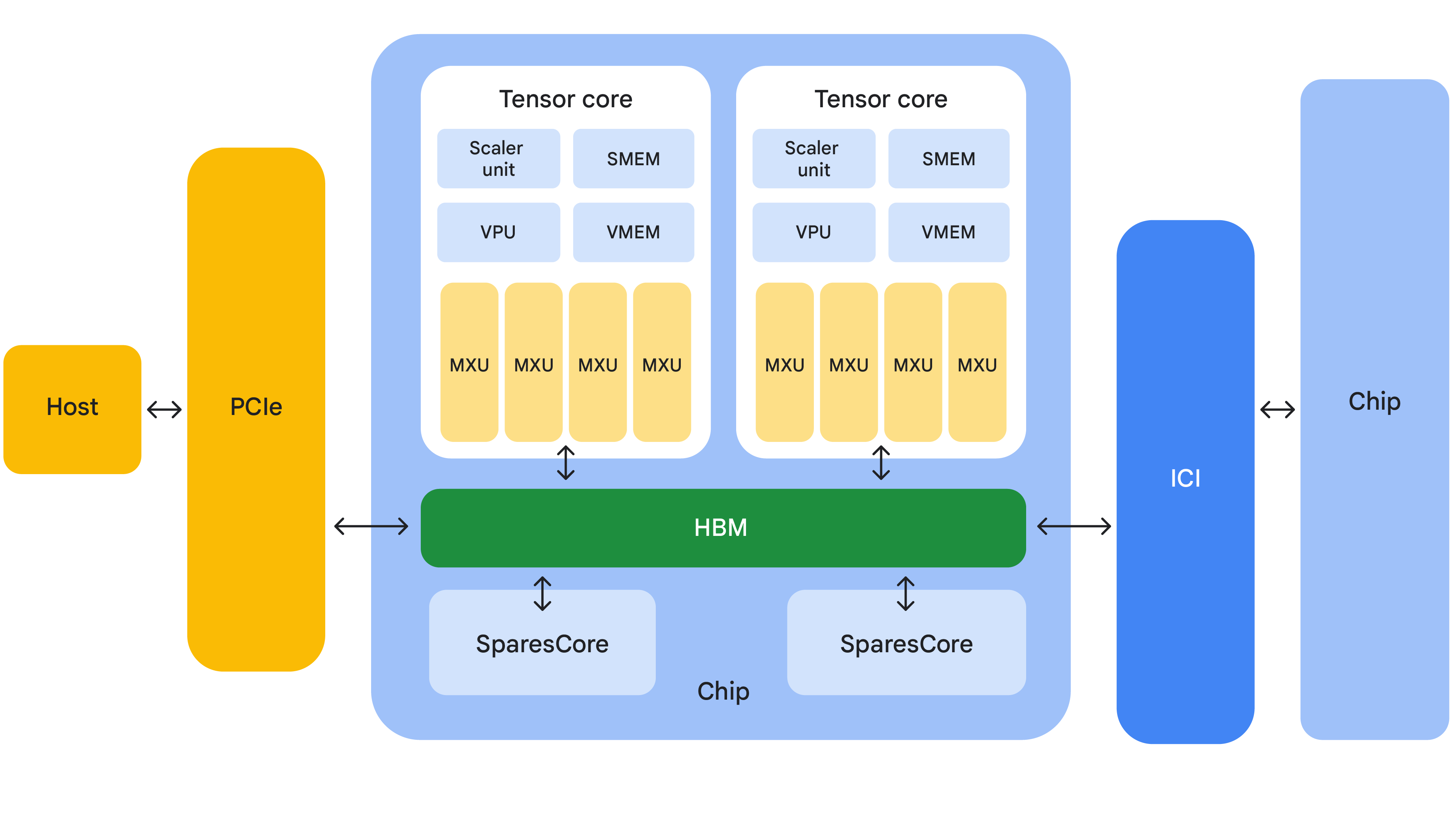
- Array size - TPUs prior to Trillium used 128x128 systolic arrays; Trillium uses larger 256x256 arrays.
- Throughput - each MXU performs up to 16,000 multiply-accumulate operations per cycle.
- Precision - MXUs accept bfloat16 inputs for the multiplies but perform all accumulations in higher-precision FP32, balancing speed and accuracy.
Scaling up: from chips to pods and slices
A single chip is powerful, but real-world models often need far more compute. That is where cubes, pods, and slices come in - progressively larger groupings of interconnected chips.
TPU cube
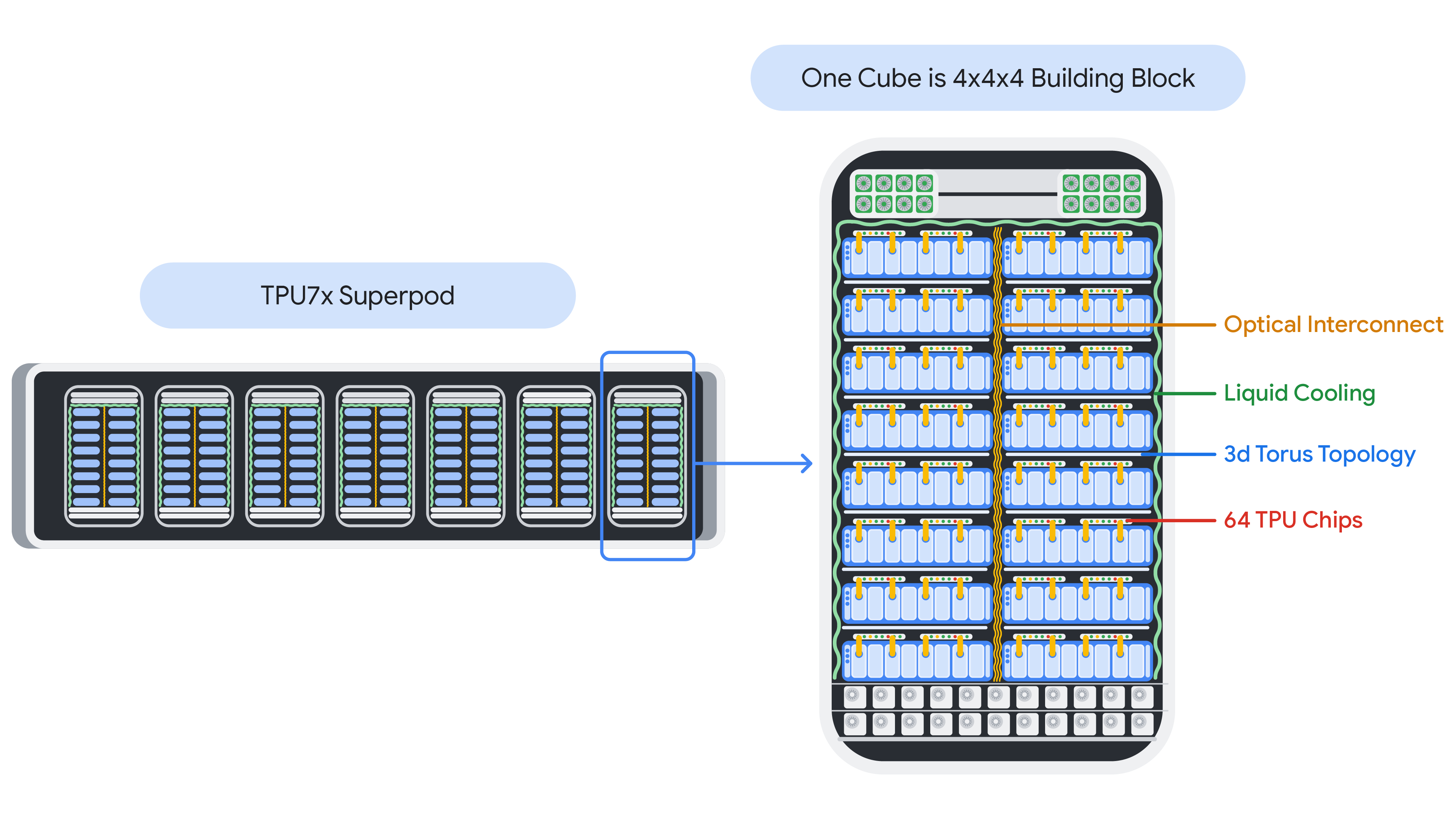
A cube is a physical unit of 64 chips arranged in a 4x4x4 topology of interconnected TPU chips. Cubes apply only to 3D topologies (starting with TPU v4) and are also called a rack.
TPU pod
A TPU pod is a collection of TPUs physically grouped together and connected by a specialized high-speed network. The total number of chips in a pod varies by TPU version.
Slice
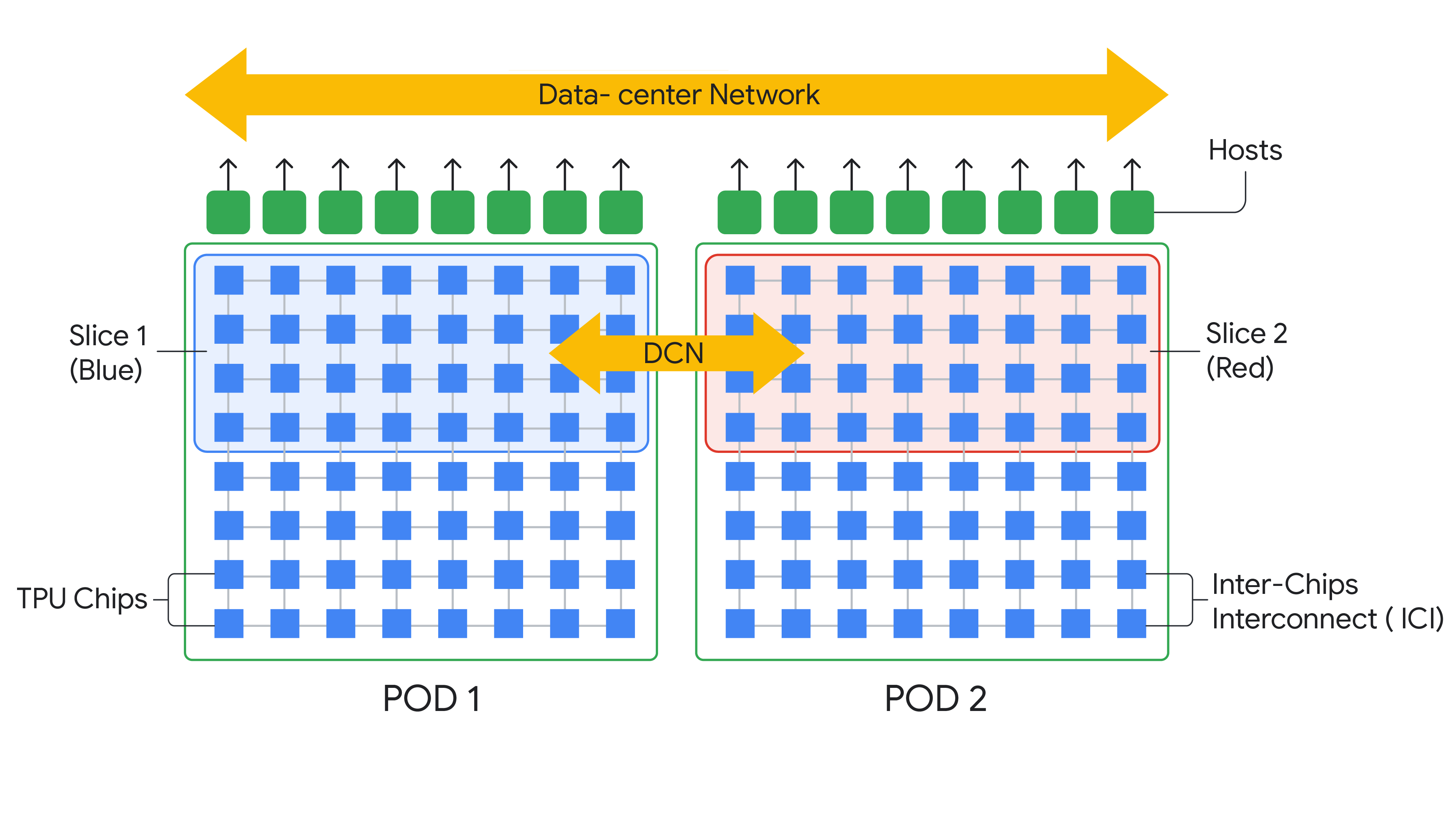
A slice is a subset of chips within a single pod, all connected by fast Inter-Chip Interconnects (ICI) so they communicate at very low latency. A slice can range from 4 chips up to the size of a superpod.
The key distinction: a slice is a flexible, abstract unit - any group of chips from 4 up to a superpod. A rack (cube) and a pod are fixed physical units of measurement. Slices still have physical properties, but the term names a conceptual grouping, not a piece of hardware.
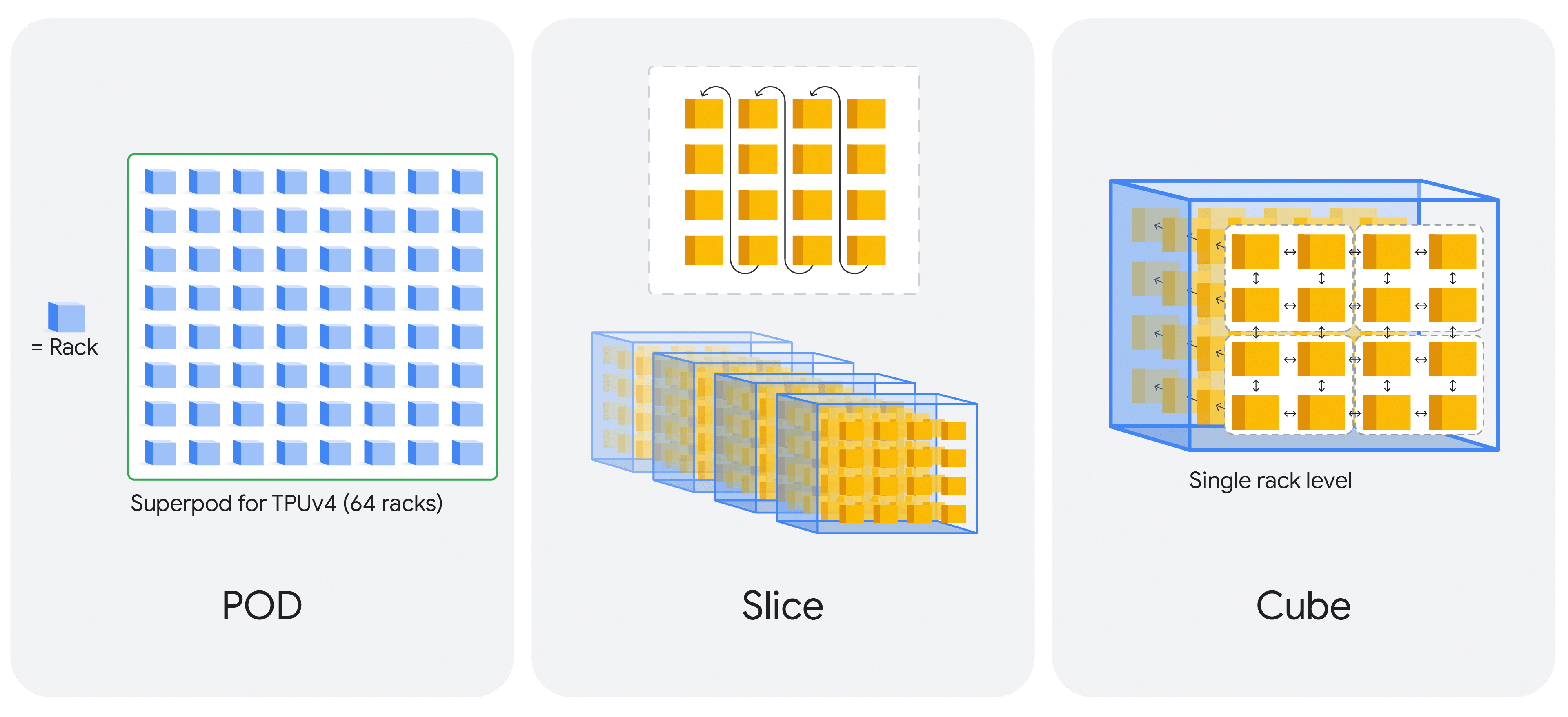
- Slices are measured in either number of chips or number of TensorCores, depending on the TPU version.
- Chip shape and chip topology describe how the chips within a slice are arranged and interconnected.
Beyond a single slice: Multislice
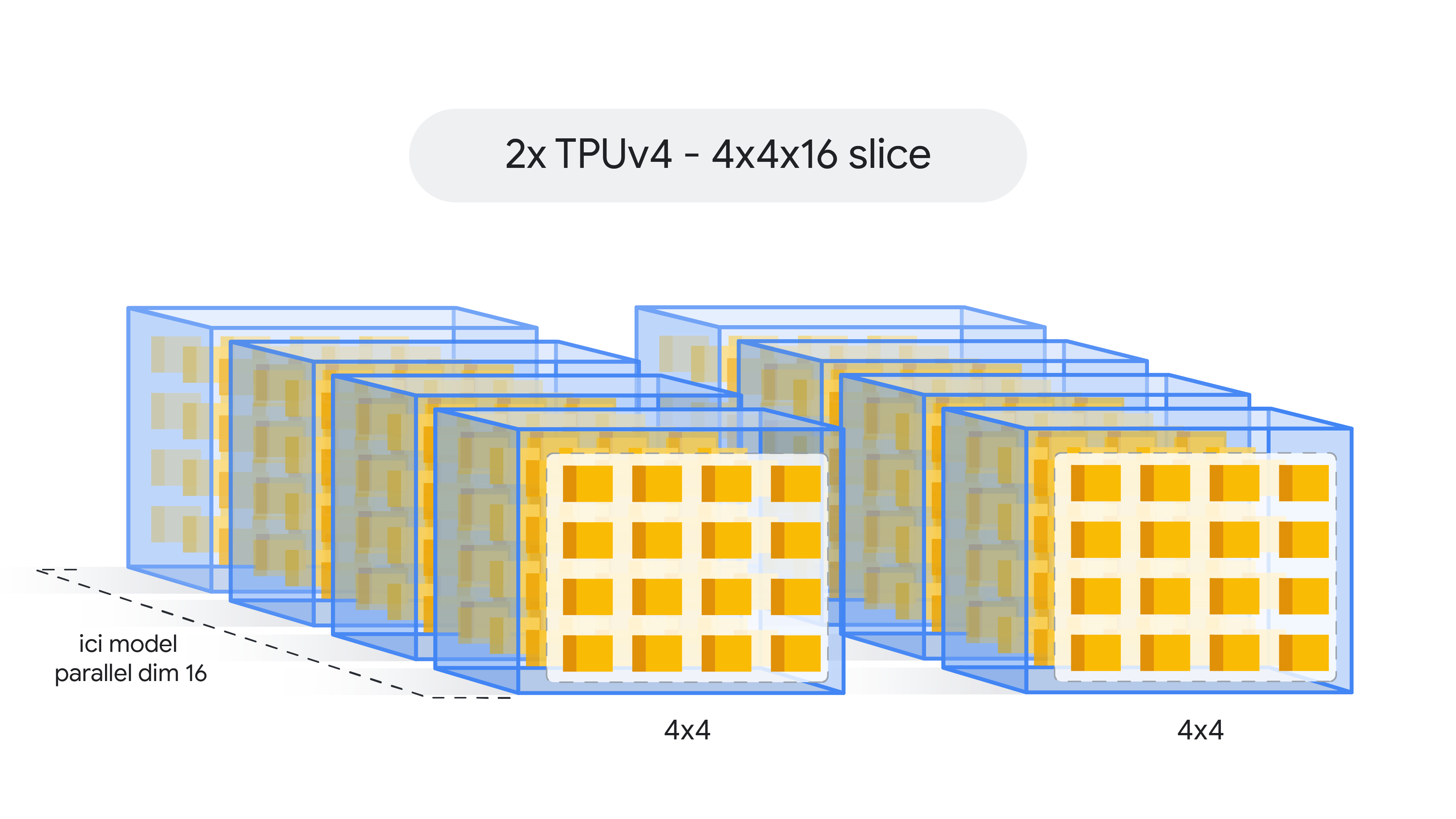
Sometimes a single slice isn't enough for the largest models. Multislice extends TPU connectivity beyond the high-speed ICI links inside one slice, leveraging the broader data-center network (DCN) to move data between slices.
How it works:
- Within each slice, data travels over the super-fast ICI.
- Between slices, data is transmitted over the DCN.
Why Multislice?
This hybrid ICI-within / DCN-between connectivity enables parallelism across slices, letting a single job use far more TPU cores than one slice can provide - essential for training truly massive models. You choose whether to run a job on a single slice or across multiple slices, depending on scale and requirements.
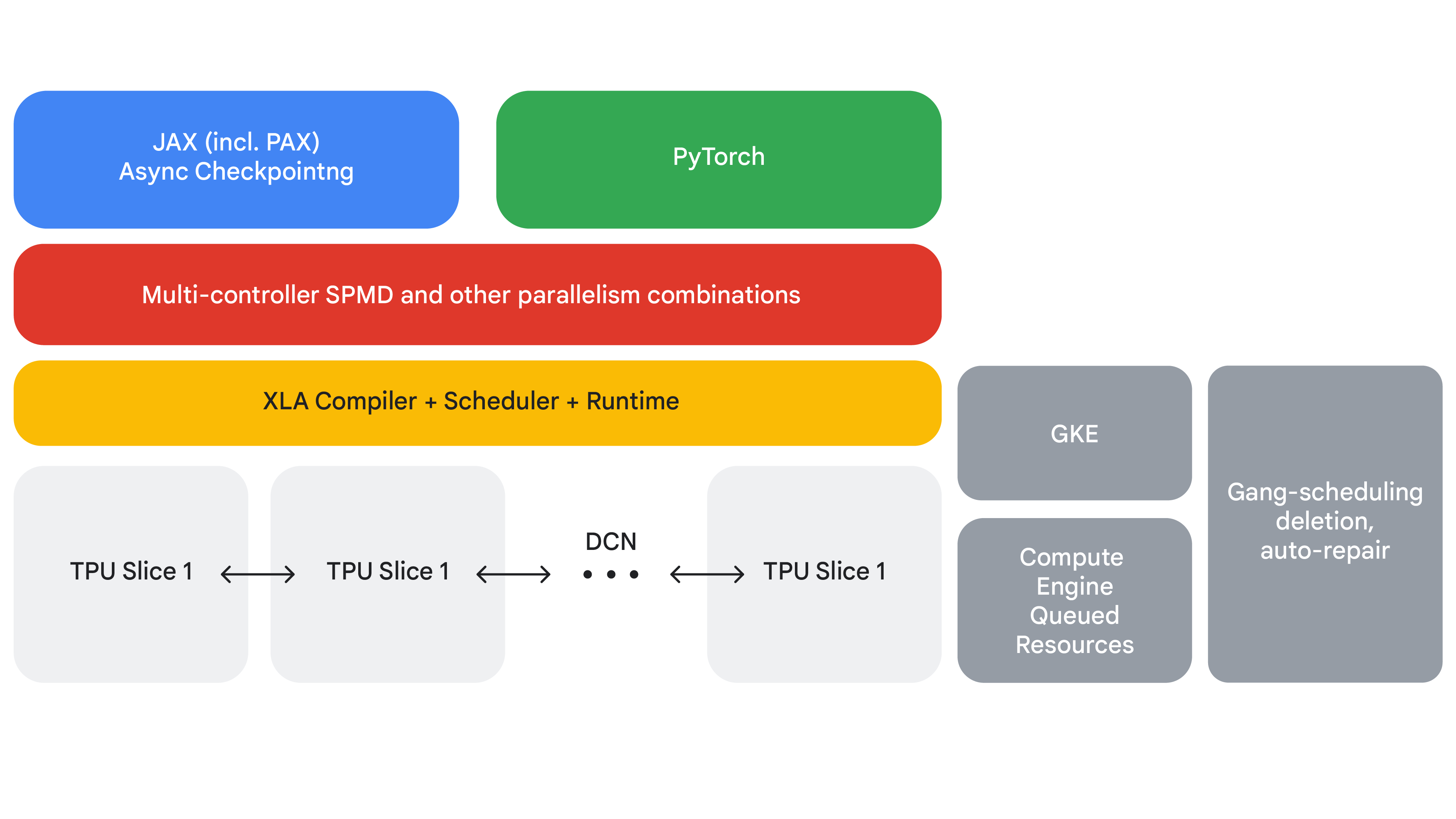
Multislice is a full-stack solution - optimized network, runtime, scheduler, frameworks, and orchestration - so cutting-edge LLMs too large for a single device train efficiently, cost-effectively, and with a good developer experience.
Ensuring reliability: ICI resiliency
The ICIs are vital for TPU performance, so Cloud TPU offers ICI resiliency to improve their fault tolerance. It improves the reliability of the optical links and optical circuit switches (OCS) that connect TPUs between different cubes - ICI links within a cube typically use more robust copper. When an OCS or optical ICI fault occurs, ICI resiliency lets connections be rerouted around it.
ICI resiliency improves scheduling availability - you're more likely to get the TPU resources you need even during minor network issues. The trade-off: when a reroute happens there may be a temporary, minor degradation in ICI performance.
- Enabled by default for Cloud TPU v4 and v5p.
- Applies to slices that are one cube or larger (for example
v5p-128or a4x4x4configuration).
Recap
Cloud TPUs are Google's custom-built ASICs, designed with specialized TensorCores to accelerate demanding ML computations. Systems build up from individual chips - each with MXUs, HBM, and SparseCores - into cubes (64 chips, 4x4x4), pods (collections of chips), and slices (flexible subsets within a pod), then across data centers with Multislice over the DCN. High-speed ICI ties chips together at every level, and ICI resiliency keeps that interconnect reliable at scale.